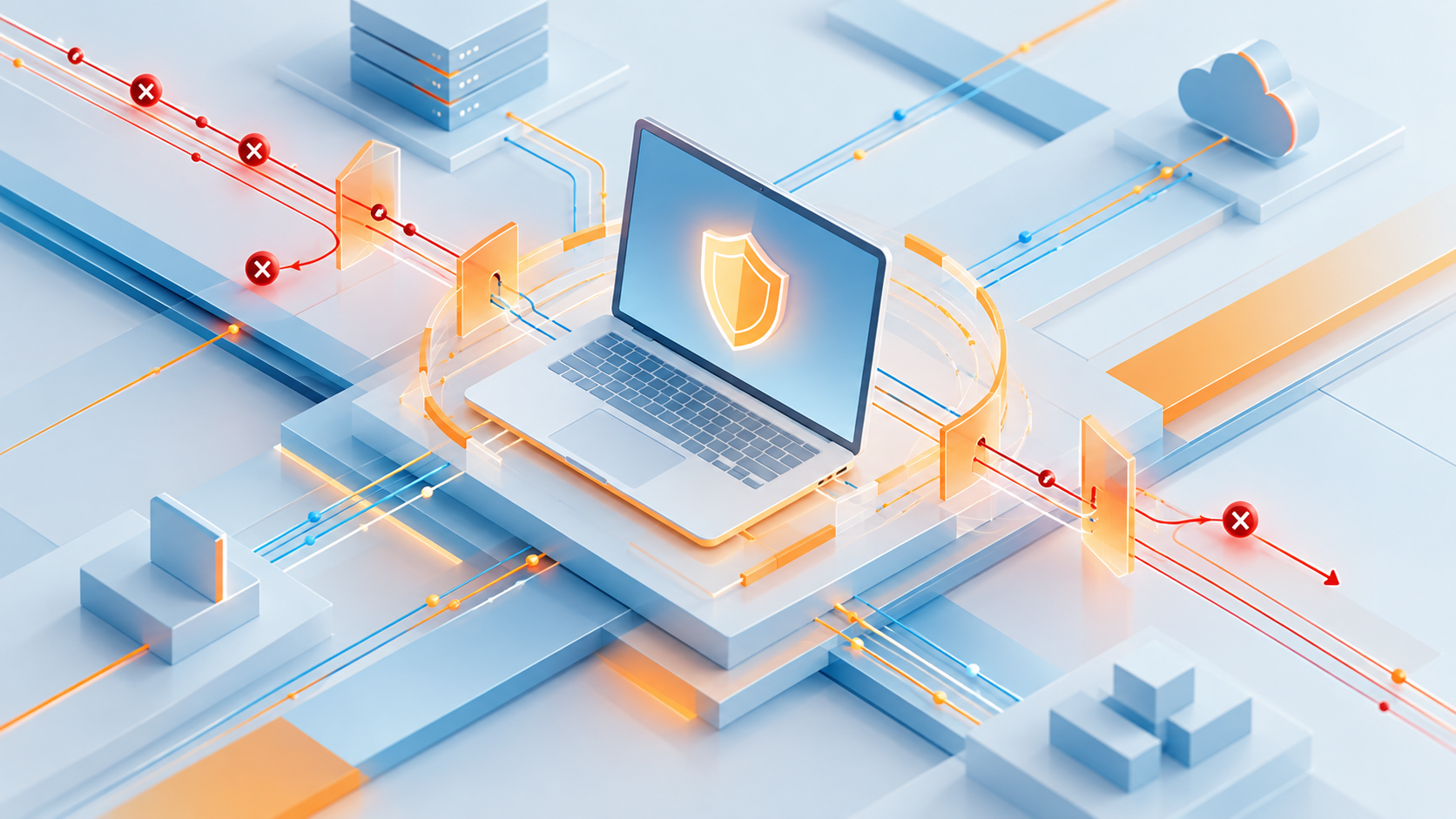





Cybersecurity analysis is not just protection — it’s a strategic tool. We explain how to properly identify threats, eliminate vulnerabilities, and build a resilient IT environment that doesn’t hold back the business but helps it grow and evolve.
How to turn information security into a strategic business advantage
Imagine the situation: a large financial organization serving millions of clients worldwide suddenly becomes the victim of a cyberattack.
All systems and business processes are paralyzed, transactions are frozen, and users’ confidential data ends up in the hands of attackers. The company’s stock rapidly falls, and its reputation takes a devastating blow. The reason for the catastrophe was just one oversight — a vulnerable software component that wasn’t updated in time.
This is not a thriller movie plot, but a real case that happened to Equifax in 2017. As a result of the large-scale attack, the personal data of more than 147 million Americans, 15 million Britons, and 19,000 Canadian citizens was compromised. The company suffered multimillion-dollar losses and paid heavy fines. This situation could have been avoided if a timely cybersecurity assessment had been carried out.
Any IT system, regardless of its complexity and protection level, remains vulnerable to threats that can lead to data leaks, disruption of business processes, and financial or reputational losses.
Information security (IS) is a systematic approach to protecting corporate data, IT infrastructure, and business processes from external and internal threats, as well as the continuous analysis of these threats and minimizing the associated risks.
For modern business, this is not just a technical task — it’s a strategic priority. Reliable IS ensures:
- safety and confidentiality of information,
- data integrity,
- availability of systems and services.
By regularly assessing the state of security and identifying weak points, a company can not only react to incidents but also prevent them before they occur.
Where threats come from and how to understand where the business is vulnerable: a breakdown of cybersecurity analysis

External threats
- Competitors — industrial espionage, attempts at unauthorized access to IT systems to obtain trade secrets.
- Hackers — individuals or groups acting on their own or on commission. Their goals: data theft, malware deployment, disabling systems, blackmail.
Internal threats
- Employees — one of the hardest threats to detect. Mistakes, negligence, or intentional actions can lead to serious consequences: from data leaks to the disruption of key services.
- Partners and contractors — companies that have access to systems but don’t always have sufficient protection themselves. A well-known example is the breach of the large Target network through a climate control contractor.
Natural threats
- Natural disasters — floods, fires, earthquakes, hurricanes capable of destroying data centers and infrastructure.
- Technical failures — from equipment breakdowns to power outages.
Artificial threats
- Software bugs and vulnerabilities — flaws and weak spots that attackers can exploit.
- Malware — can enter the corporate network through both targeted attacks and accidental exposure.
Security analysis is the foundation for identifying vulnerabilities, assessing potential threats, and developing measures to protect data and infrastructure from cyberattacks and other incidents.
As part of a comprehensive audit, Senseti Group performs assessments across the following key areas:
1. Hardware
Assessment of servers, data storage systems, workstations, and mobile devices to ensure protection against physical access, damage, and theft.
2. Software
Analysis of operating systems, business applications, databases, and deployed software for vulnerabilities and backdoors. This includes update verification, authorization and authentication policy configuration, and access rights control.
3. Network Systems
Audit of routers, switches, VPNs, encryption systems, and intrusion detection/prevention systems (IDS/IPS).
4. Security Policies
Review of access levels, password management, monitoring systems, and security audit protocols.
Backup and Recovery Processes
Reliable backups and fast data recovery are key to minimizing the impact of any IT incident.
During the audit, we assess:
- backup frequency,
- protection of backup copies from unauthorized access,
- presence and relevance of a Disaster Recovery Plan (DRP).
Senseti Group recommends using distributed and encrypted storage and regularly testing recovery scenarios in real-world conditions.
Access Rights Management (IAM)
Identity and Access Management (IAM) systems control who has access to which resources.
Comprehensive analysis includes:
- reviewing the procedures for granting and revoking access,
- auditing user activity logs,
- evaluating the effectiveness of authentication and authorization..
We implement solutions with multi-factor authentication and automated anomaly detection in user behavior.
Mobile Devices and Remote Access
Hybrid and remote work models introduce new attack vectors.
We assess:
- security of employee mobile devices,
- protection of VPN channels and remote connections,
- Bring Your Own Device (BYOD) policies.
Senseti Group develops secure standards for mobile and remote access to ensure data protection under all work scenarios.
Regulatory Compliance
Depending on your industry and business location, your IT infrastructure must comply with specific standards and regulations:
- GDPR — personal data protection in the EU,
- ISO 27001 — international information security management standard,
- local data protection laws.
We perform compliance audits, prepare infrastructure for certification, and help pass inspections without penalties or downtime.
Cybersecurity Risk Analysis Methods and Tools
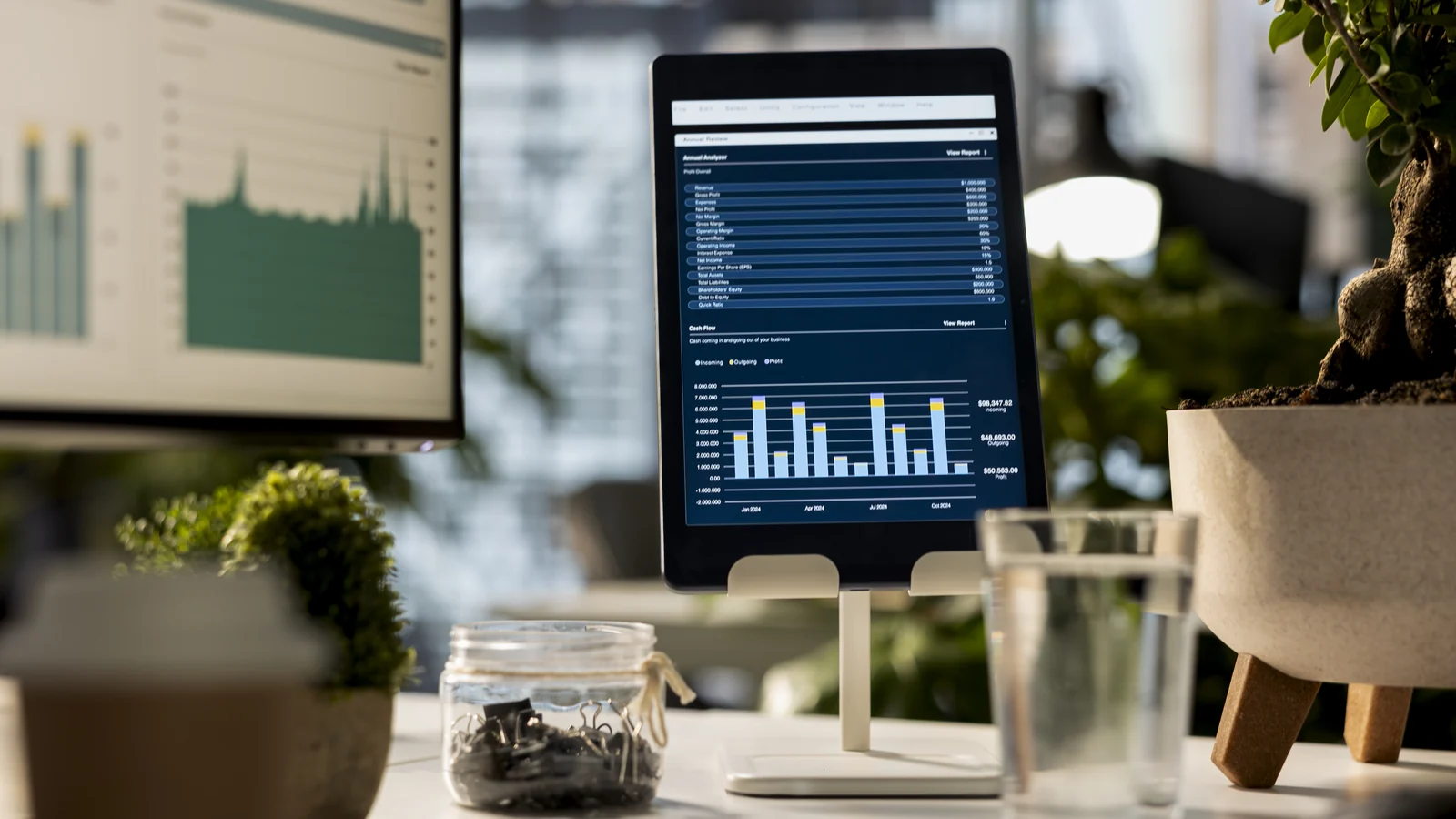 Cybersecurity analysis is the identification, evaluation, and prioritization of potential threats and vulnerabilities that may affect a company’s key assets. At Senseti, we use several approaches.
1. Qualitative Risk Analysis
Expert evaluation of threats and their impact:
- inventory of assets at risk,
- identification of vulnerabilities,
- assessment of threat likelihood and potential damage,
- risk mitigation recommendations.
Best suited for quickly identifying problems and determining initial protective measures.
2. Quantitative Risk Analysis
Mathematical modeling for accurate calculation of attack probabilities and potential losses. This method is essential for budgeting and planning cybersecurity investments.
3. Scenario-Based Analysis
Creation of potential incident models, such as cyberattacks, data breaches, and service outages.
Steps include:
- developing scenarios,
- evaluating likelihood and consequences,
- assessing current protection systems,
- implementing additional safeguards.
4. Attack Tree Analysis
Visual breakdown of incidents — from the main issue (e.g., a data breach) to the sequence of contributing factors.
This allows for systematic elimination of root causes and closing of vulnerabilities.
We use specialized tools, including:
- Vulnerability scanners — automated system and application checks,
- Source code analyzers — identifying bugs and vulnerabilities during development,
- Network traffic monitors — detecting anomalies and intrusions,
- IDS/IPS — intrusion detection and prevention systems,
- SIEM — centralized security event collection and analysis across the entire network.
When Do Companies Need a Vulnerability Assessment?
Vulnerability assessment is not a one-time procedure — it's an ongoing process essential for maintaining resilient business security. Cyberattacks are becoming more sophisticated and targeted every day, which means cybersecurity audits are necessary for every organization without exception.
However, there are specific situations where such assessments become critical:
Deployment of New Systems and Solutions
Launching cloud services, implementing enterprise data management systems, or upgrading infrastructure always introduces new points of risk.
We thoroughly examine all components for vulnerabilities to ensure that changes don't compromise your security posture.
Security Policy Changes
Any update to security policies must be accompanied by a full audit — to confirm their effectiveness and alignment with current threats.
Incident Response
After a data breach or a web application attack, an urgent analysis is needed to identify weak points and prevent recurrence.
Business Expansion and Market Entry
Opening new branches, launching data centers, or expanding into new regions requires a security review to avoid overlooked vulnerabilities that could stall growth.
Who Needs a Cybersecurity Audit and What Actions Should Be Taken?
- Financial institutions — due to handling sensitive transactions.
- Healthcare organizations — because of personal medical data storage.
- Critical sectors — such as energy, transportation, and government entities.
Once vulnerabilities are identified, Senseti Group develops a comprehensive response plan that includes:
- timely software updates and security patches,
- enhanced network protection and traffic monitoring,
- data encryption and multi-factor authentication,
- minimized access rights and user activity monitoring.
Policies and Response Plan
Technical measures must work in tandem with organizational procedures:
- corporate device usage policies,
- password management standards,
- incident response protocols,
- a tested Disaster Recovery Plan (DRP) to ensure business continuity.
Conclusion
The effectiveness of any security audit depends directly on the expertise of the team conducting it. Rather than relying on internal teams burdened with daily tasks, it’s more efficient to engage external experts with proven industry experience.
Senseti Group performs comprehensive audits of network security, infrastructure, and all IT systems — identifying weak points and implementing tailored solutions to reliably protect your business against modern cyber threats.