

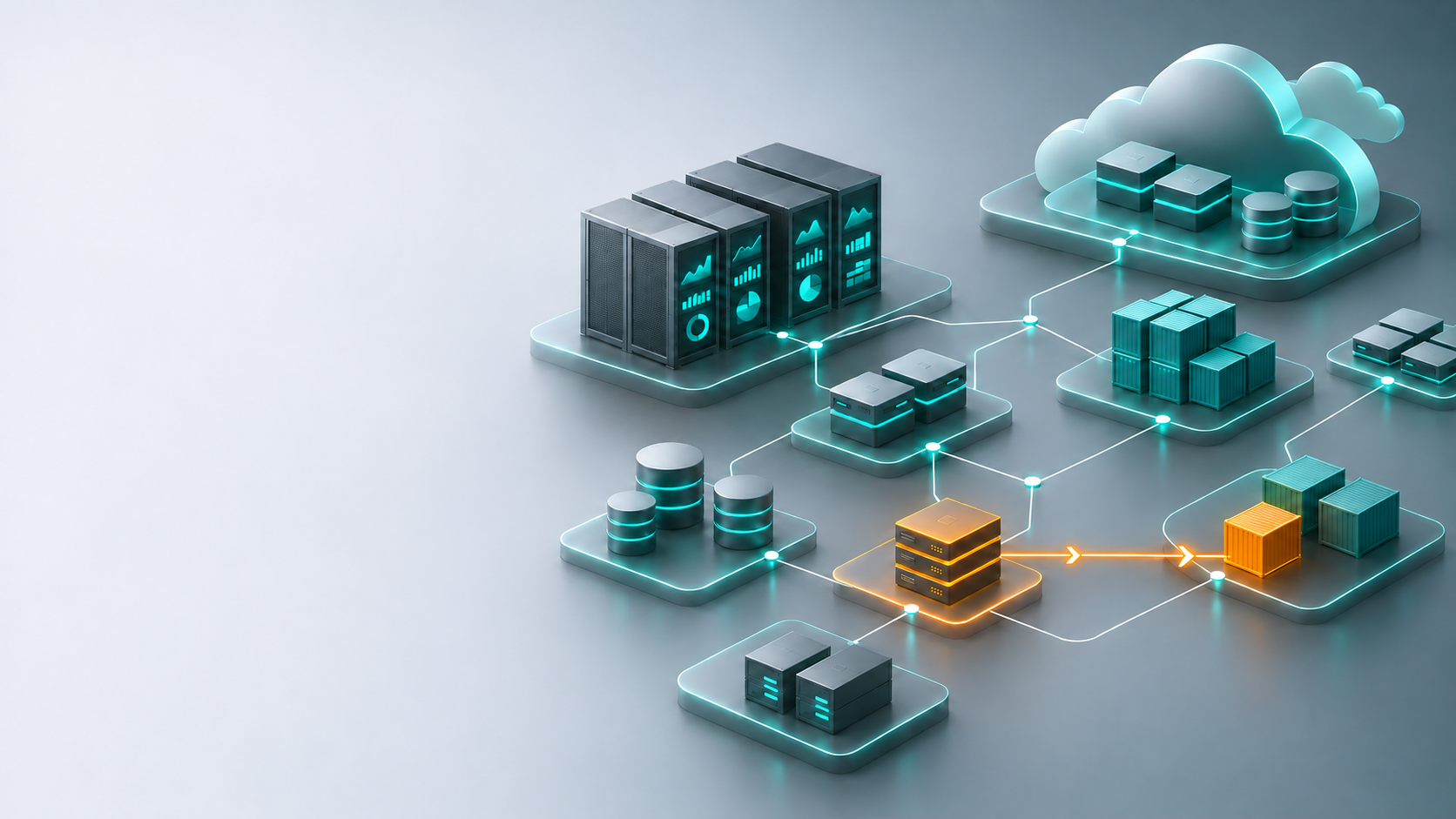
Infrastructure and Cloud Security
Protect Your Infrastructure, Control Access, and Reduce Cyber Risk
Senseti helps businesses secure servers, cloud resources, and workloads across on-premises, hybrid, and multicloud environments.
We identify insecure configurations, excessive privileges, and vulnerabilities. We implement CSPM, CNAPP, network segmentation, and change controls for Azure, AWS, Google Cloud, and enterprise infrastructure.








15+
years of IT security experience
50+
technology partners
98%
client satisfaction
Keep Your Infrastructure Under Control
Enterprise systems no longer operate within a single data center. Servers, virtual machines, databases, containers, and cloud services run across different environments, constantly exchanging data.
A single exposed configuration, excessive permission, or compromised token can give attackers access to critical resources.
Senseti helps identify these risks, integrate security controls, and maintain consistent protection policies as your infrastructure evolves.

Where Your Infrastructure Becomes Vulnerable
The more cloud platforms, servers, and workloads your business uses, the harder it becomes to control configurations, access, and changes. Without centralized security management, even a small mistake can create an entry point for an attack.
Security Misconfigurations
Exposed storage, internet-accessible administrative interfaces, and incorrectly configured security rules can leave internal resources vulnerable. Without regular checks, these issues may go unnoticed.
Excessive Privileges
Service accounts, cloud identities, and automation tokens may have more permissions than necessary. If compromised, they can give attackers access to critical systems and data.
Unsecured Network Connections
Overly permissive firewall rules and insufficient segmentation increase the attack surface. Once attackers compromise one system, they may attempt to move laterally to other resources.
Limited Infrastructure Visibility
Resources are spread across cloud accounts, subscriptions, data centers, and teams. Some servers and workloads may remain outside centralized inventories and security monitoring.
Vulnerable Workloads
Servers, containers, and Kubernetes clusters may contain vulnerabilities, insecure configurations, or outdated components. These weaknesses create additional opportunities to compromise applications and infrastructure.
Uncontrolled Changes
Manual changes to cloud configurations may conflict with Terraform definitions and other Infrastructure as Code templates. Without drift detection, insecure settings can be reintroduced during subsequent deployments.
Inconsistent Security Policies
Azure, AWS, Google Cloud, and on-premises systems use different security controls. Without shared baselines, maintaining consistent protection and checking alignment with CIS Benchmarks becomes more difficult.
Lack of Continuous Monitoring
A one-time assessment captures infrastructure security at a single point in time. New resources, permission changes, and network rules can introduce risks immediately after deployment.
Comprehensive Infrastructure and Cloud Security
Senseti brings together configuration management, access controls, network security, and workload protection into a coordinated security architecture. We select solutions based on your existing infrastructure and actual business risks.

Cloud Security Posture Management (CSPM)
We monitor configurations across Azure, AWS, and Google Cloud. We identify exposed resources, insecure settings, policy violations, and deviations from established security baselines.

Server and Workload Protection (CWPP)
We secure physical and virtual servers, cloud resources, and containers. We configure vulnerability detection, threat monitoring, and runtime security controls.
Network Security and Microsegmentation
We restrict unnecessary connections between systems and infrastructure segments. We configure firewalls, network policies, and microsegmentation to limit the potential spread of attacks.

Cloud Infrastructure Entitlement Management (CIEM)
We analyze roles, service accounts, and managed identities. We identify excessive permissions and enforce the principle of least privilege.

Enterprise Identity Protection
We strengthen security for Active Directory, Microsoft Entra ID, and administrative accounts. We protect privileged access and manage connections between on-premises and cloud identities.

Secrets and Key Management
We protect passwords, API keys, tokens, and certificates. We configure centralized storage, access restrictions, secret rotation, and checks for exposed credentials in source code.

Container and Kubernetes Security
We assess cluster configurations, container images, permissions, and network policies. We identify vulnerabilities before deployment and configure runtime threat detection for active workloads.
Hybrid and Multicloud Security
We consolidate risk monitoring across Azure, AWS, Google Cloud, private clouds, and on-premises infrastructure. We establish consistent security policies while accounting for each platform's capabilities and existing controls.
Security Policy Management
We define security baselines based on applicable CIS Benchmarks recommendations. We automate configuration assessments, drift detection, and enforcement of supported security policies.
Infrastructure as Code Security
We assess Terraform, Bicep, and CloudFormation configurations before deployment. We identify insecure settings, excessive permissions, and exposed secrets in source code to help prevent risks from entering new environments.
A Unified Infrastructure Security Architecture
Security relies on continuous oversight of cloud and on-premises resources, identities, network connections, and workloads. Identified risks are assessed by severity and routed into remediation and incident response processes.
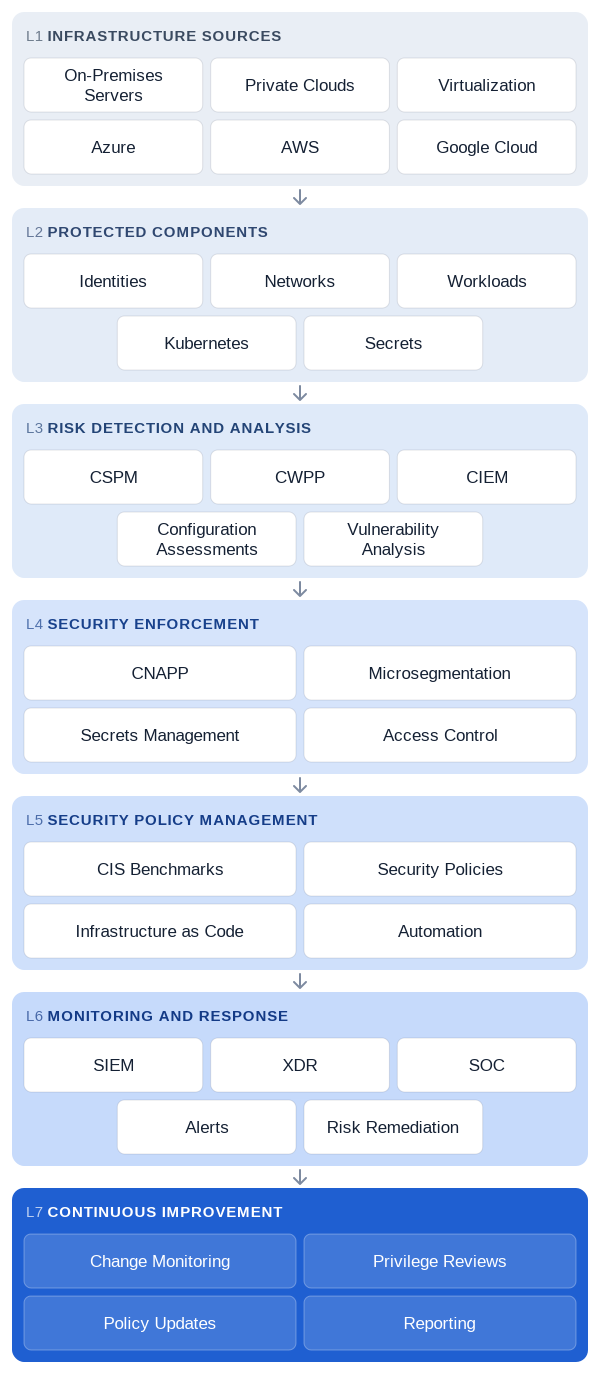
Senseti brings these components together into a coordinated security framework. This helps your team identify critical risks, prioritize remediation, and maintain security as your infrastructure changes.
Technologies for Enterprise Infrastructure Security
We select tools based on your cloud platforms, network architecture, existing licenses, and security requirements. Our approach combines Fortinet, native cloud security capabilities, and specialized solutions.
Fortinet: Network and Cloud Security
We use FortiGate and FortiManager for network segmentation, traffic control, and policy management. We consider FortiCNAPP for cloud risk analysis, workload protection, and privilege management.
Native Cloud Security Tools
Microsoft Defender for Cloud, Azure Policy, AWS Security Hub CSPM, and Google Security Command Center help assess configurations, access permissions, and compliance with security requirements.
Cloud-Native Application Protection (CNAPP)
We evaluate Palo Alto Prisma Cloud, Check Point CloudGuard, CrowdStrike Falcon Cloud Security, and Trend Vision One for protecting cloud resources, containers, and workloads.
Microsegmentation and Kubernetes Security
We use Cilium and Calico for Kubernetes network policies. In virtualized environments, we implement supported distributed firewall and microsegmentation capabilities.
Secrets and Key Management
HashiCorp Vault, AWS Secrets Manager, and Azure Key Vault help secure passwords, API keys, and tokens, manage access permissions, and rotate secrets.
Hybrid Infrastructure
We consider VMware Cloud Foundation, Azure Arc, and Kubernetes for managing on-premises, virtualized, and cloud resources within a coordinated architecture.
Automation and Infrastructure as Code
We use Terraform, Ansible, Bicep, and CloudFormation to manage configurations, automate security checks, and control changes before infrastructure deployment.












How We Implement Infrastructure and Cloud Security
We begin by analyzing your existing environment and prioritizing risks. Then we design the security architecture and gradually deploy controls while assessing their impact on running services.

Infrastructure Analysis
We map cloud accounts, servers, virtual machines, Kubernetes clusters, and related services. We identify critical assets and existing security controls.
Outcome: Infrastructure inventory and a map of key dependencies.

Security Assessment
We assess configurations, vulnerabilities, access permissions, network connections, and alignment with baseline security requirements.
Outcome: A report outlining identified risks and remediation priorities.

Security Architecture Design
We design protection for on-premises, hybrid, or multicloud environments. We define segmentation rules, access controls, monitoring requirements, and integrations.
Outcome: A security architecture design and approved protection policies.

Pilot Testing
We validate the selected tools and policies on a limited set of resources. We assess risk detection accuracy and the impact of security controls on critical services.
Outcome: Validated configurations and a plan for broader deployment.

Deployment and Integration
We configure CSPM, CNAPP, network protection, and privilege management. We connect required SIEM, XDR, or SOC integrations and automate security assessments.
Outcome: Deployed security controls with consistent protection policies.

Validation and Ongoing Support
We test key security scenarios, prepare documentation, and provide recommendations to the responsible team. Under a separate agreement, we offer ongoing monitoring, change control, and policy updates.
Outcome: A validated configuration, operational documentation, and an agreed approach to ongoing security management.
Manage Infrastructure Security with Measurable Results
Unified Infrastructure Visibility
Gain centralized visibility into your on-premises and cloud resources. Track security assessment coverage and identify systems that remain outside established controls.
Reduced Attack Surface
Detecting insecure configurations, excessive privileges, and risky connections helps limit potential attack paths across your infrastructure.
Measurable Security Posture
Track alignment with security baselines, the number of critical findings, and the time required to detect and remediate them. Use these metrics to evaluate the effectiveness of security controls.
Secure Scalability
Bring new cloud accounts, services, and workloads under consistent security policies while maintaining oversight as your infrastructure expands.
Less Manual Work
Automated configuration checks, change monitoring, and centralized alerts help reduce routine tasks and identify high-priority risks faster.
Environments That Require Infrastructure Security
Public Clouds
Your business uses Microsoft Azure, AWS, or Google Cloud and needs centralized checks for configurations, permissions, and resource security.
Hybrid Infrastructure
On-premises servers operate alongside cloud services. Network security, identity management, and protection policies need to remain consistent across environments.
Multicloud Environments
Resources are distributed across multiple cloud providers. You need common security requirements while retaining visibility into each platform's specific capabilities.
Private Clouds and Data Centers
Your company runs physical servers, virtualization platforms, and enterprise networks. Critical systems require access controls, segmentation, and vulnerability management.
Containers and Kubernetes
Applications run in containers and Kubernetes clusters. You need to assess images, configurations, network policies, and runtime workload security.
Cloud Applications and APIs
Enterprise services are exposed through cloud applications and APIs. You need to control permissions, configurations, and related security risks.
Serverless Computing
Your company uses AWS Lambda, Azure Functions, or Google Cloud Run. You need to review permissions, execution limits, and security controls for incoming events.
Can You See Every Risk Across Your Infrastructure?
Review your configurations, privileges, workloads, and network connections. Senseti will help identify critical risks, prioritize remediation, and develop a practical plan to strengthen your security.
Contact UsInfrastructure Security Backed by 15+ Years of IT Expertise
Senseti combines expertise in cybersecurity, IT infrastructure, and cloud technologies. We help businesses protect on-premises, hybrid, and multicloud environments while supporting everyday operations.

15+ Years of Experience
We design and implement protection for servers, networks, virtualization, and cloud platforms, taking critical dependencies and risks into account.

50+ Technology Partners
We select Fortinet, Microsoft, and other solutions based on your infrastructure architecture, compatibility, and existing investments.

98% Client Satisfaction
We introduce changes gradually, validate security policies, and minimize disruption to critical services.

End-to-End Implementation
From assessment and architecture design to deployment, validation, and ongoing infrastructure support.
FAQ
It includes assessments of configurations, access permissions, workloads, vulnerabilities, and network connections. We also implement security policies, change monitoring, and centralized risk management.
CSPM helps identify insecure configurations and assess the security posture of cloud resources. CNAPP combines broader capabilities, including CSPM, workload protection (CWPP), cloud entitlement management (CIEM), and container security.
Yes. Specialized platforms can consolidate information about resources, configurations, and risks across multiple cloud environments. However, individual security controls may differ by provider.
Access policies, network segmentation, workload protection, and event monitoring must be coordinated across on-premises and cloud environments. The specific tools depend on your architecture.
Not always. Some assessments can be performed without agents through cloud APIs and other supported mechanisms. Detecting and blocking certain runtime threats may require agents or additional system-level controls.
Continuously. New resources, configuration changes, and permission updates can introduce risks immediately after deployment. Automated monitoring helps detect these deviations promptly.
Contact Us
Send a message to our team to find out how we can help you